
The Human Quest Among the Stars
Understanding why we look upward, and what that enduring impulse reveals about human curiosity, knowledge, and responsibility.
The Ancient Spark of Curiosity
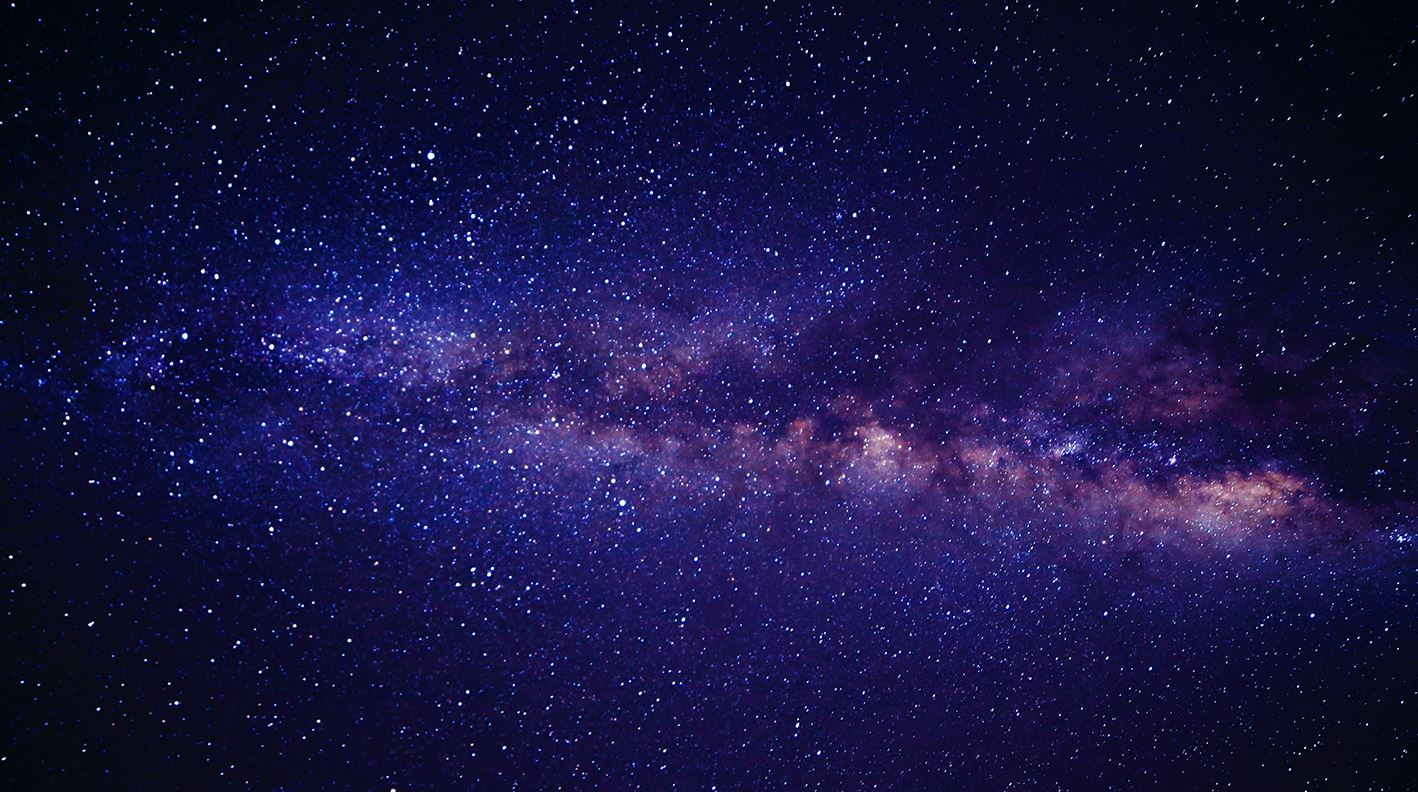
From the earliest stages of human existence, the night sky has served as far more than a distant backdrop of light. It became a reference point for survival, storytelling, and meaning. Long before written records, communities observed the movement of stars to track seasons, navigate vast landscapes and oceans, and establish rhythms for agriculture and ritual. These early interpretations transformed the sky into a shared archive of memory, where myths, symbols, and practical knowledge coexisted. The constellations etched into collective imagination reflected not only observation, but a deep desire to situate human life within something larger. That impulse, to ask what lies above and why it behaves as it does, became the foundation from which astronomy and astrophysics would later emerge. The questions posed by early observers have never vanished, they have simply acquired new tools, extending human inquiry across unimaginable distances.
The Evolution of Cosmic Exploration
As knowledge systems developed, humanity’s investigation of the cosmos became increasingly structured and self-correcting. Early models organized celestial motion into predictable patterns, while later thinkers challenged inherited assumptions, reshaping the understanding of Earth’s position in space. These shifts were not merely technical corrections, they altered how humanity understood itself. Removing Earth from the center of the universe did not diminish human significance, but reframed it within a broader, more complex reality. Modern exploration has extended this transformation through ground-based observatories, orbital telescopes, and interplanetary missions. Each advance reveals a universe that is dynamic, layered, and often counterintuitive. Colliding galaxies, extreme gravitational environments, and relic radiation from the universe’s earliest moments continue to expand the boundaries of knowledge. Exploration remains an ongoing process of refinement rather than conquest, driven as much by humility as by ambition.
The Role of Astrophysics in Daily Life
Astronomy and astrophysics are often perceived as distant from everyday concerns, yet their influence quietly permeates modern life. Mathematical frameworks developed to describe celestial motion underpin technologies used in navigation, communication, and timekeeping. Observational techniques originally designed to analyze starlight are now fundamental in medical imaging, materials science, and environmental monitoring. Satellite systems, guided by precise astronomical calculations, enable global positioning, weather forecasting, and data transmission. These applications illustrate how inquiry into distant phenomena consistently returns value to human society. Knowledge generated through cosmic study does not remain abstract, it becomes embedded in tools, infrastructure, and systems that shape daily experience.
The Cosmic Perspective and Human Identity
Looking outward into the vastness of space inevitably reshapes how humanity understands itself. Astronomical discovery has revealed a universe composed of billions of galaxies, each containing billions of stars, within which Earth occupies a narrow and fragile niche. This awareness encourages a perspective grounded in humility and interdependence. The famous image of Earth as a small, suspended point of light captures this realization with striking clarity. It reminds us that distinctions dividing societies are minor when set against cosmic scale. From this vantage point, the study of space becomes a lens for ethical reflection, urging stewardship, cooperation, and long-term thinking in the face of shared vulnerability.
The Interplay of Imagination and Science
Scientific progress depends not only on precision, but on imagination. Equations describe physical laws, yet imagination allows those laws to be conceptualized, tested, and questioned. Observational data reveals patterns, while creative thinking generates hypotheses about what those patterns might imply. Throughout history, artistic and scientific impulses have moved in parallel, each shaping how the universe is interpreted. The same curiosity that inspires poetic descriptions of the sky motivates scientific efforts to measure, map, and explain it. This interplay ensures that exploration remains a deeply human endeavor, combining rigor with wonder rather than reducing discovery to calculation alone.
The Frontier of the Unknown
Despite centuries of observation and analysis, the universe remains largely unexplained. Phenomena such as dark matter and dark energy dominate cosmic structure while resisting direct detection. The search for life beyond Earth continues to expand, using increasingly sophisticated methods to analyze planetary environments far beyond the solar system. Each answer produces new questions, extending inquiry rather than concluding it. The unknown persists not as a barrier, but as an invitation, ensuring that exploration remains open-ended and adaptive. Progress lies not in reaching final certainty, but in maintaining the capacity to question and revise.
Humanity’s Place in the Cosmic Story
Modern science has revealed that the materials composing human bodies originated in stellar processes billions of years ago. Elements forged in ancient stars were dispersed across space and later assembled into planets, ecosystems, and living organisms. This continuity links human existence directly to cosmic history. Understanding this connection deepens both scientific and philosophical awareness, positioning humanity as both observer and participant in an ongoing cosmic process. Knowledge of origins carries responsibility, shaping how future choices are made within a universe that continues to evolve.
A Long-Term Vision
This publication exists to bridge careful scientific inquiry with thoughtful reflection. Its purpose is not only to explain astronomical phenomena, but to encourage sustained curiosity, critical thinking, and public engagement with science. By presenting complex ideas with clarity and respect for evidence, it aims to support understanding without oversimplification. Exploration of the universe is inseparable from exploration of human perspective, and this work seeks to hold both in balance, honoring past knowledge while remaining open to discovery yet to come.