Exploring the Universe Through Tools That Expand Human Senses
The Astronomy Toolkit - Instruments of Discovery
The Telescope as the Gateway to the Cosmos
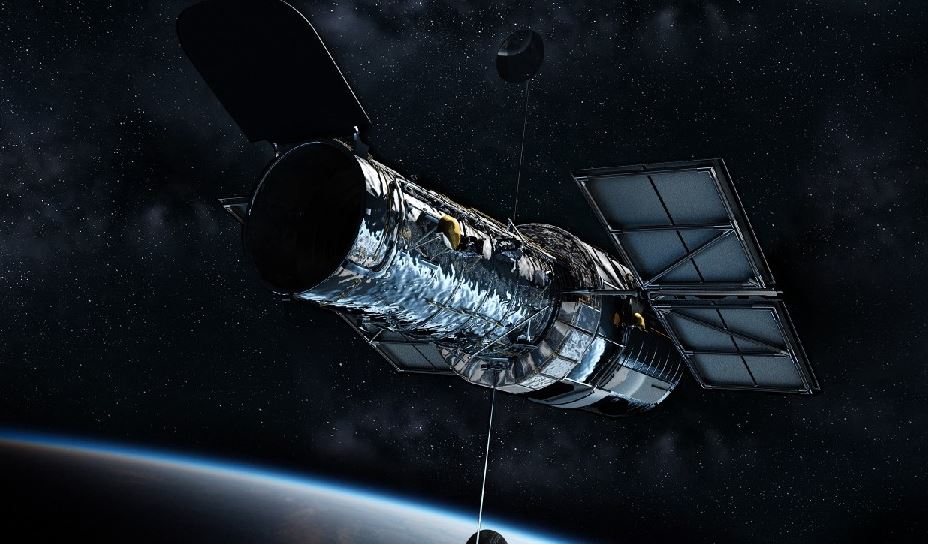
The telescope remains the most iconic instrument of astronomy, a device that fundamentally changed how humanity sees the universe. Galileo’s simple refractor revealed moons orbiting Jupiter and phases of Venus, directly challenging the geocentric worldview. Modern telescopes, both on the ground and in space, extend our vision far beyond the visible spectrum. Radio telescopes detect cosmic whispers, infrared observatories peer through interstellar dust, and X-ray telescopes capture the violent energy of black holes. Every lens and mirror brings the cosmos closer, turning faint points of light into worlds and structures rich with complexity.
Spectroscopy: Decoding the Colors of the Universe
While telescopes collect light, spectroscopy analyzes it. By splitting starlight into its component wavelengths, astronomers can uncover a wealth of information. The color of a star reveals its temperature, while the presence of absorption lines points to its chemical composition. Spectroscopy also enables us to measure motion, through the redshift or blueshift of spectral lines, allowing us to understand galactic expansion and orbital dynamics. This tool turns light into language, transforming photons into data that speaks of origins, evolution, and destiny.
Astrophotography: Capturing Time and Light
Beyond professional science, astrophotography has emerged as both an artistic and scientific tool. Long-exposure imaging allows faint galaxies, nebulae, and comets to become visible in stunning detail. Amateur astronomers contribute valuable images that help track variable stars, supernovae, and even near-Earth objects. Astrophotography bridges the gap between personal wonder and scientific contribution, showing that the beauty of the cosmos is not only for researchers but also for anyone willing to set up a camera under the night sky.
Computational Models and Simulations
The complexity of the universe often defies direct observation. For this reason, computational models and simulations have become vital parts of the astronomy toolkit. By inputting known physical laws into advanced software, scientists can simulate galaxy collisions, star formation, or the behavior of black holes. These simulations allow researchers to test theories against observable data, bridging the gap between mathematics and the night sky. They also provide a way to predict events that might otherwise take billions of years to unfold, condensing cosmic history into comprehensible timelines.
Citizen Science and Distributed Observation
Modern astronomy has expanded beyond the walls of observatories. Citizen science projects like Galaxy Zoo or SETI@home invite the public to classify galaxies, analyze signals, or search for exoplanets. This collective approach harnesses the curiosity of thousands, turning ordinary individuals into contributors to scientific discovery. Distributed observation also helps track transient phenomena like eclipses or meteor showers, events best studied through many eyes across the globe. The toolkit of astronomy, therefore, is not limited to instruments but includes the collective efforts of humanity itself.
Probes and Space-Based Instruments
Some questions cannot be answered from Earth’s surface. The atmosphere blocks much of the electromagnetic spectrum, which is why space-based instruments have become essential. Satellites like Hubble and James Webb provide uninterrupted views of the cosmos, while space probes like Voyager, Cassini, and New Horizons carry instruments directly into the outer reaches of the solar system. These tools represent extensions of human presence, allowing us to sense environments and energies far beyond what our bodies could ever endure.
The Language of Data: Astronomy in the Digital Age
The universe produces more data than any one observatory can contain. Petabytes of information flow daily from telescopes, satellites, and sensors. The modern astronomy toolkit includes not only instruments of observation but also instruments of interpretation: data processing algorithms, artificial intelligence, and high-powered computing. These tools sift through immense archives to reveal patterns that the human eye alone might miss. In this way, data itself becomes an instrument, shaping our understanding of the cosmos through precision and analysis.
The Philosophy of Tools: Extending Human Perception
At its core, every instrument in astronomy is an extension of human perception. The eye can only see so much, but with the right tools, we can perceive radio waves, X-rays, gravitational waves, and neutrinos. Each addition to the toolkit does more than extend vision—it reshapes our place in the universe. Tools transform us from passive observers into active participants in cosmic discovery. They remind us that exploration is not confined to physical travel but can occur through the sharpening of senses and the building of instruments that reach beyond our natural limits.